Introduction
Flat Holm (Ynys Echni) is an island just 5 miles from Cardiff Bay, situated in the Bristol channel. It is designated as Local Nature Reserve, Site of Special Scientific Interest (SSSI) and Special Protection Area (SPA) and supports a wealth of history and wildlife.
Home to an abundance of wildlife, the island is particularly notable for its breeding colony of Lesser black-backed gulls (Larus fuscus). This amber-listed species under the Birds of Conservation Concern 5 (BOCC) breeds on the Atlantic and Arctic coasts of Europe with the UK supporting around 40% of the European population (RSPB 2025). The island is also home to other species of breeding gulls, including Herring gulls (Larus argentatus), and a couple of Great black-backed gulls (Larus marinus), making this site all the more rich.
Sadly, since the 1980s, Lesser black-backed gulls have suffered a huge national decline. At rural and coastal colonies in particular, reduced breeding success has been linked to the loss of food sources following closures of landfill sites and reductions in fisheries discards (Ross-Smith et al. 2014). We suspect that the loss of food sources plays a huge part in both reducing breeding success, and the longevity of these gulls. With these birds struggling at a national scale the conservation and monitoring work on Flat Holm has become increasingly important. Since the 1990s the Flat Holm Ringing group has been dedicated to improving our understanding of this breeding population and identifying ways to support its recovery.
Flat Holm colour-ringing project
The Flat Holm colour-ringing project uses a range of survey and data-collection methods to monitor and better understand the island’s gull populations, now standing at just over 1,500 pairs of Lesser Black-backed Gulls and several hundred Herring Gulls. The project works closely with the island warden and a dedicated team of volunteers to ensure the continuity of this long-term monitoring effort.
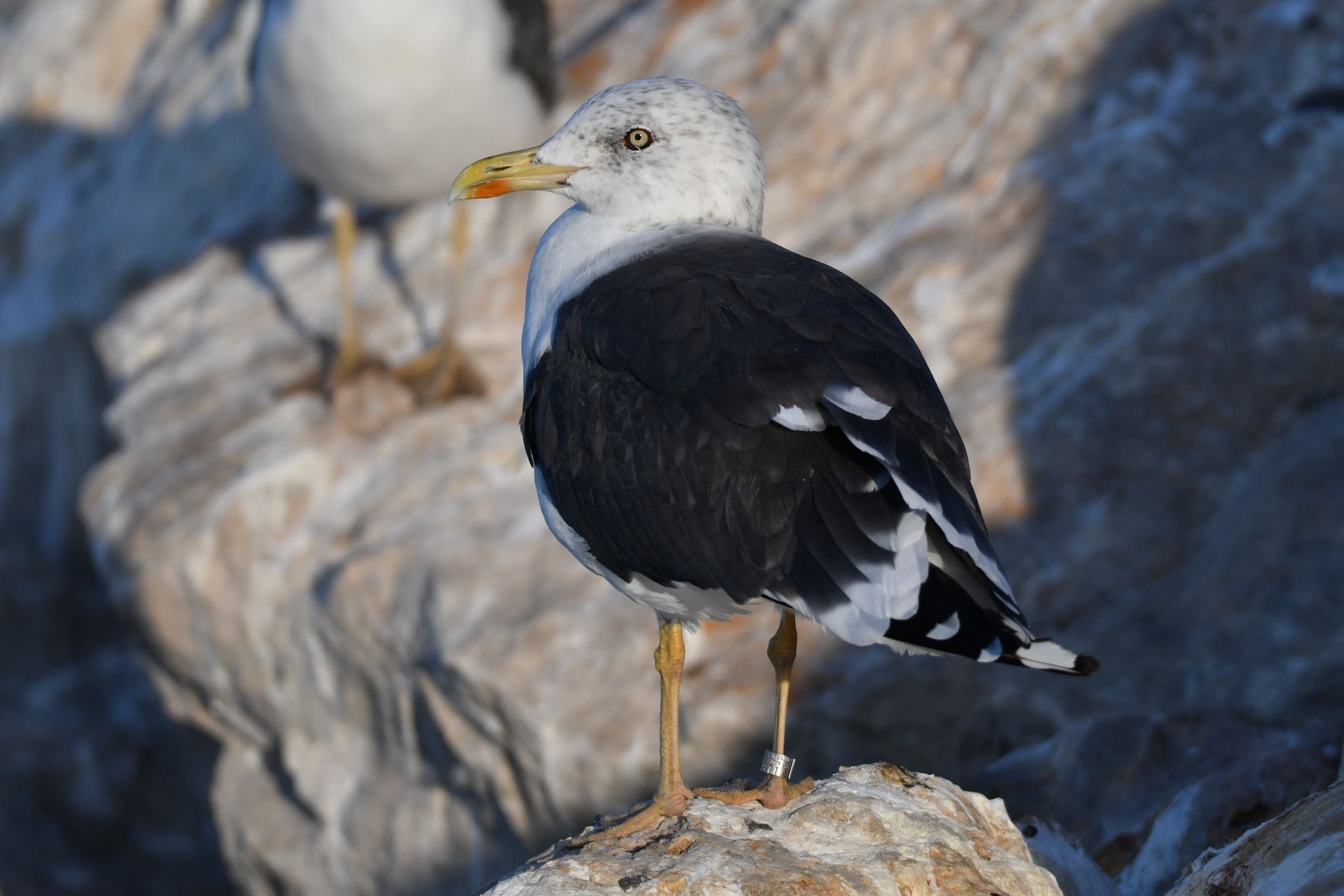
This long-term effort has generated a detailed picture of individual life histories, movement patterns, and survival, offering insights that would not be possible without continuous monitoring. In the image above we see our oldest known Lesser black-backed gull, ringed as a chick in 1993, which has been resighted in Quarteira, Portugal regularly over the years. This bird is a prime example of the species’ potential longevity, currently 33 years old.
Through annual visits to the island, the project aims to provide regular monitoring of these breeding birds, and track any changes such as inclines/declines in the colony’s size and its general health.
Nest counts
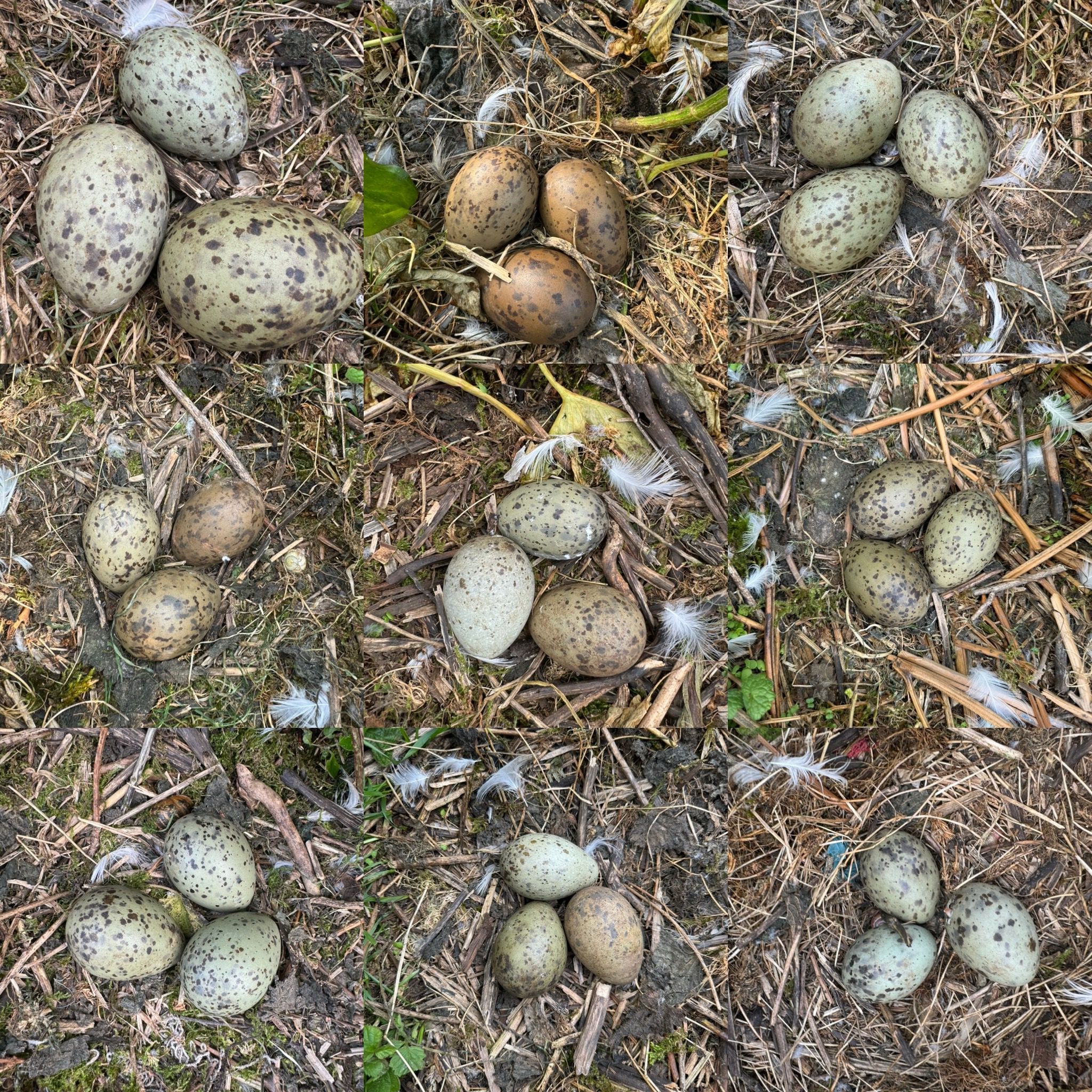
The nest count is normally the first of the visits for data collection. It’s useful to assess the population density and the amount of eggs being laid in each nest. Historically the project and its volunteers conduct an annual nest count every year at the beginning of the breeding season, but this did not happen in 2025. However, in 2024, 1503 Lesser black-backed gull nests, and 242 Herring gull nests were counted. We believe that many of the Herring gull nests that lie on the beaches/coastal parts of the island are not being counted, so to help improve the accuracy moving forward we will be using thermal drones to count the nests.
Chick ringing
Arguably the most important trip is the ringing of the chicks, this happens when the colony is well into the breeding season and chicks are beginning to fill the island. Bird ringing is the process of fitting a lightweight, uniquely numbered metal ring onto a bird’s leg to identify and track individuals. This is done through the British Trust of Ornithology and carried out by trained professionals who play a big part in the project each year. Since the project began a total of 4904 gulls have been ringed, 4703 lesser black-backed gulls and 201 Herring gulls. Importantly, these birds are fitted with both a colour and metal ring, the addition of a colour ring helps the bird to be identified as they can easily be read through binoculars, a scope or a camera lense. This can help track where the chicks go, if they make it off the island at all.
It is normal that not every chick makes it, and is equally important data, so later in the breeding season a count of chick mortalities posteriori is carried out by the warden and the island’s volunteers. In 2025 this count was carried out on August 31st and counted 150 dead chicks. We believe this count was conducted quite late, so a new methodology will be put in place for next year, where daily checks will take place with dead chick’s wings cut to prevent recounts.
Ringing trip 2025
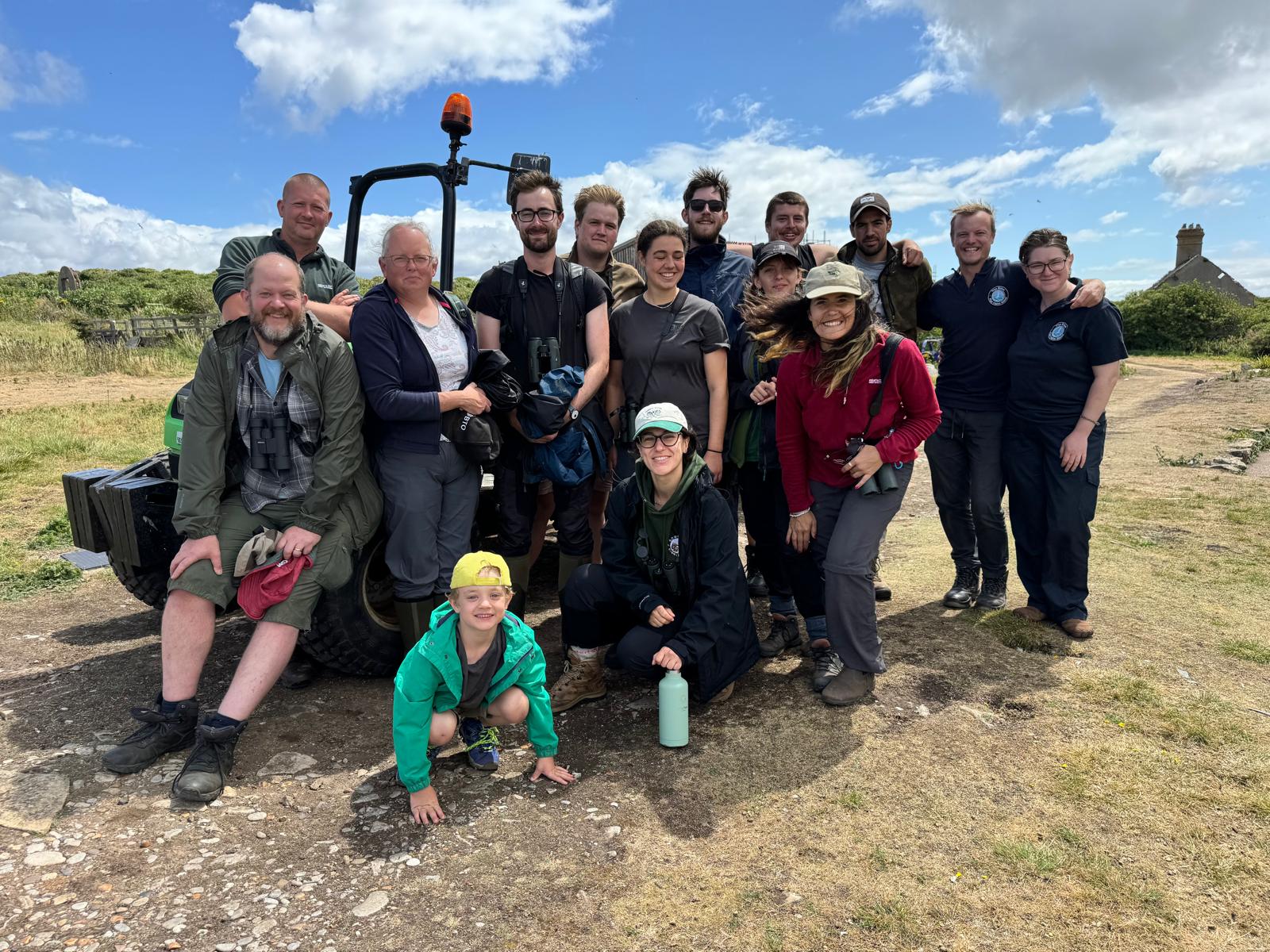
At the heart of the project lies the brilliant volunteers and bird ringers, who without we would not have these important data sets. With the project currently being steerheaded by Dr Richard Facey and Dr Aurora Gonzalo Tarodo.
Every year a core team of ringers, governed by the British trust of Ornithology BTO, go to the island with volunteers and trainee bird ringers to ring the chicks and a handful of the adults. In the year 2025 the team consisted of the following:Aurora Gonzalo Tarodo
Richard Facey
Matthew Facey
Andy Scott
Jon Middleton
Cheryl Wilson
Jackson Hellewell
Ursula Scuderi
Annabelle Booker
Damián Granado Bejarano
Amira Nuseibeh
Megan Roberts (Flat Holm Warden)
Evan Parry
Simon Sinclar
Tom Koszak
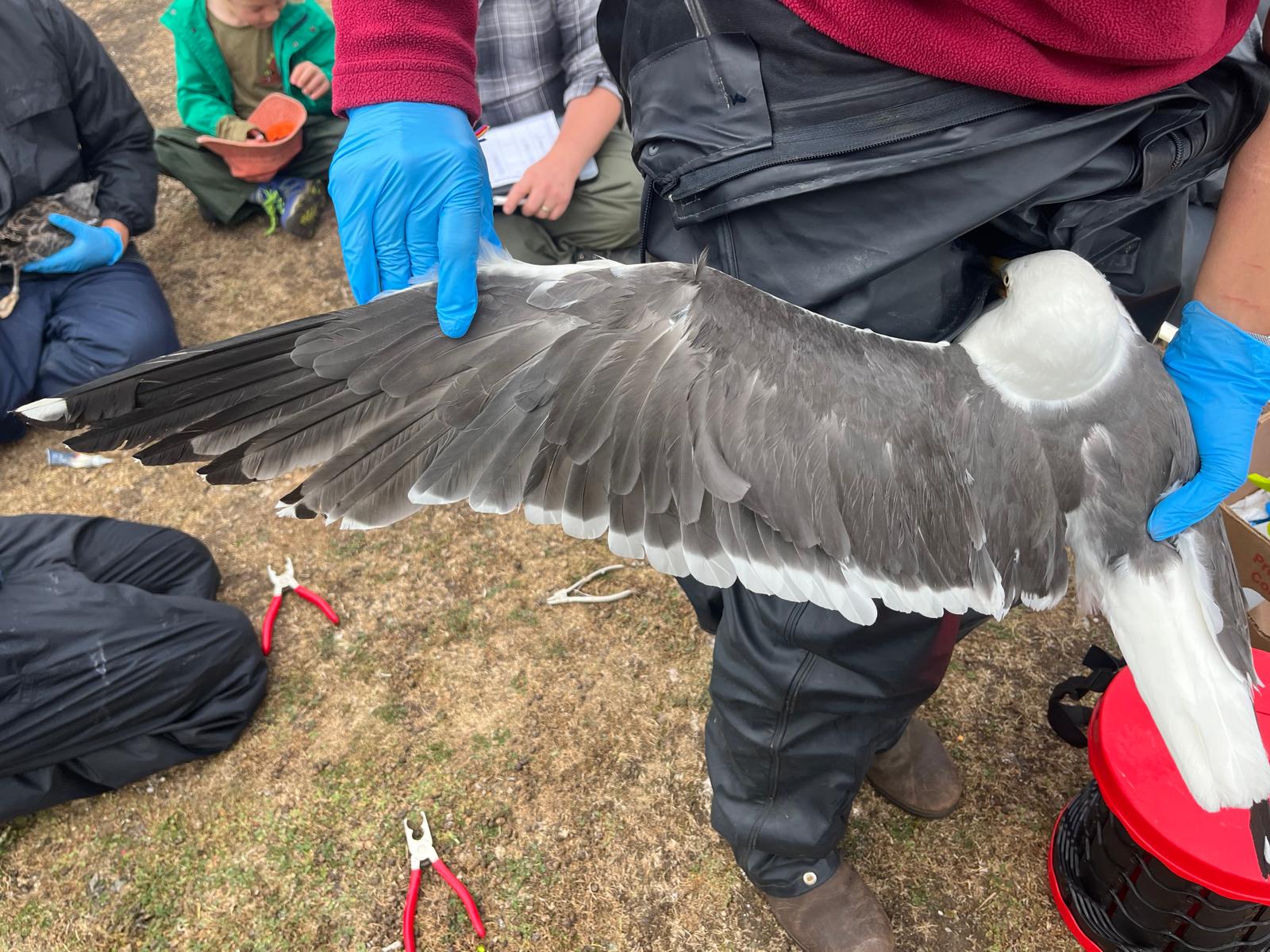
Over a few days the team aims to ring as many chicks as possible, while collecting biometric measurements for later study, and assess the general condition of the birds. As trained individuals this process is carried out in the most efficient way possible, and requires much hard work and concentration. This year's trip finished with the ringing of 324 birds, 264 Lesser black-backed gulls and 33 Herring gulls. Including 7 adult birds.
The information gathered, and what it helps us understand is worth it’s weight in gold.
Wider regional context
The work doesn’t stop on the island. Tracking the journeys and migration of the birds when they leave the island is key to understanding the colony and their wider regional context. Colour rings specially, allows us to receive sightings from all over Europe and the north of Africa.
Any sightings can be submitted here: Flat Holm Gulls Project WebpageThe Colony’s current health
We know the colony isn’t doing as well as it was in earlier years, this year we saw that the chicks were smaller and grew on a lesser diet than is ideal, and from evidence on the island we can guess what sort of things the chicks are eating. Due to Flat Holm’s proximity to Cardiff bay, we believe the city landfill site played a role in the nutrition of the chicks before it’s closure in 2021. So although now the bins of Cardiff city make for easy pickings, it is not the ideal diet for these birds. What we are seeing suggests the birds are feeding on a lot of low quality food and rubbish, and bringing this back to the island to feed young. Lots of pizza, plastic and chicken bones are found on the island, and although this cannot be conclusive data, it is another reason why the work being done by The Flat Holm Gull project is crucial to the longevity of this colony. Only through further trips and monitoring can we pinpoint exactly what is causing this decline. But what we do know is that it will be crucial for these birds in the following years to continue to protect their habitat on this island and what remains of their food sources.
Future Work
The project looks to improve certain processes and methodologies to help provide a more accurate insight into the gull colony on Flat Holm island. With the implementation of thermal drones for the annual nest count, and a new methodology for mortality counts. There is still so much more to understand and to help improve the island each year before the gulls return for breeding.
Written by Annie Booker